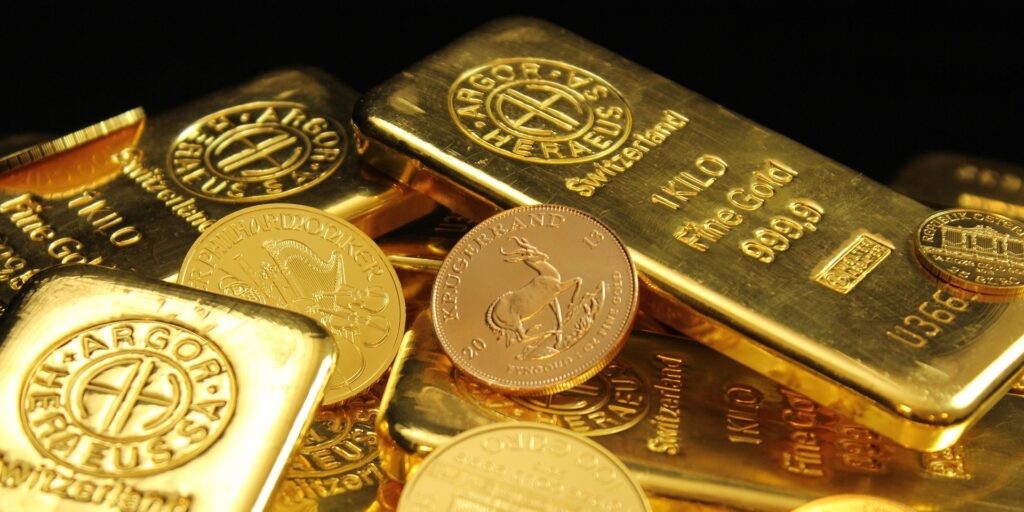
Gold and Silver Prices Experience Volatility Amid Market Corrections
The gold and silver markets have seen significant fluctuations recently, with gold prices breaching the $5,500-per-ounce mark before undergoing a notable correction. As market sentiment shifted from exuberance to caution, analysts have been closely monitoring the factors contributing to the recent price shifts and the outlook for these precious metals moving forward.
Gold’s recent performance has sparked discussions about whether the market is experiencing a typical correction or if a more profound downturn is on the horizon. Analysts suggest that this may be a minor daily cycle correction, potentially nearing its conclusion. However, the possibility of a more extended intermediate correction cannot be ruled out, which could last several weeks and present a lower price point before the market stabilizes again.
Understanding Market Sentiment and Corrections
Market sentiment plays a crucial role in the price dynamics of gold and silver. Historically, exuberant buying often leads to price peaks, with sentiment sometimes overshadowing fundamental factors. When optimism peaks, the number of buyers dwindles, creating an environment ripe for correction. As prices adjust, smart investors often take profits, prompting a sell-off that exacerbates downward pressure. This cycle illustrates the delicate balance between sentiment and market fundamentals.
Recent bullish sentiment surrounding gold and silver may have reached a tipping point, leading to a correction as profits were taken and panic selling ensued. The market’s character changes dramatically during these corrections; as sellers exhaust themselves, buyers typically re-enter the market, driven by the underlying fundamentals that continue to indicate supply shortages.
Furthermore, the reaction of major financial players, including banks, can influence market movements. A coordinated effort to suppress prices, particularly in silver, may have contributed to the recent downturn, allowing larger institutions to exit short positions. Such maneuvers underline the complex interplay of market forces that can precipitate sharp price swings.
Long-Term Outlook for Gold and Silver Prices
Despite the current volatility, many analysts remain optimistic about the long-term prospects for gold and silver. The ongoing bull market, which has been in effect since 2001, is seen as mature but capable of entering a parabolic phase that could lead to significantly higher prices. Historical trends suggest that corrections are typically followed by substantial upward movements, setting the stage for potential new highs.
The expectation of prices reaching $10,000 per ounce for gold and $500 for silver underscores the belief that the current market correction is merely a temporary setback. Analysts suggest that once the correction concludes, the next leg of the bull market could propel prices much higher, potentially exceeding previous highs.
Strategic Investment Approaches Amid Market Fluctuations
For investors navigating the current market conditions, a strategic approach is essential. Many experts advise holding onto physical gold and silver, particularly until significant price ratios, such as the gold-to-silver ratio, reach more favorable levels. A ratio of 25 to 1, for example, could signal an opportune moment for profit-taking on a portion of holdings while retaining a portion to benefit from further price appreciation.
Investors are also encouraged to monitor broader market sentiments, including public enthusiasm for gold and silver. A surge in interest from those unfamiliar with the metals can be a sign of market saturation, suggesting that it may be time to reassess positions. This behavioral observation aligns with historical patterns seen in previous market bubbles.
Potential Shifts to Other Investment Avenues
As the gold and silver markets continue to evolve, some investors are contemplating potential rotations into alternative assets, such as Bitcoin and equities. The cryptocurrency market, while historically volatile, may offer opportunities for profit as sentiment shifts. Timing these transitions effectively could yield significant returns, particularly if gold and silver price movements peak.
In the case of the stock market, emerging technologies such as artificial intelligence and robotics are expected to drive growth in the coming years. Investors may look to capitalize on these trends once the current bull market in precious metals begins to cool down. The cyclical nature of markets suggests that transitioning to undervalued assets during periods of correction can present lucrative opportunities.
Staying Calm in a Volatile Landscape
In a landscape characterized by rapid fluctuations and emotional investor responses, maintaining a level head is paramount. Market corrections are a natural part of the investment cycle, and understanding this can help investors avoid panic selling. Historically, strategic entries into the market during corrections have proven beneficial, as bull markets tend to recover and yield substantial profits.
Investors are advised to focus on long-term strategies, recognizing that timing a perfect entry is often less critical than simply participating in the market. The current correction is expected to pass, paving the way for renewed growth and profitability in the gold and silver markets. By employing a disciplined approach and remaining attuned to market dynamics, investors can position themselves for success as the next phase of the bull market unfolds.